

Unschooling as a term is often debated as to what it exactly means. In the most general terms, it means child-led learning, which means it allows children to follow their own interests at their own pace. For most, it means no curriculum, tests, or things like phonics, where parents act as facilitators versus teachers. Parents watch to see what their children’s interests are, then provide the environment, resources, and opportunities to explore those interests. The premise is that children are naturally curious, eager to learn, intelligent, and parents trust their children, and this concept.
The critics often will say nothing will be accomplished, that this concept allows kids to be lazy, or unmotivated as children need an adult to constantly tell them what to do. They also suggest unschooling parents are neglectful, or uninvolved. What this concept actually does is teach children how to be self-directed, goal-oriented, believe in themselves, plays to their strengths which boost confidence, and self-motivation, which ultimately helps for high school but especially for college.
Every homeschool family does things differently, that’s the beauty and freedom of homeschooling. Some unschooler’s don’t allow electrons or tv, some limit it, and others allow it. I think of what I do more as sneaky schooling. I have one child who has ADHD and another on the spectrum so the straight-up curriculum doesn’t work here. I find ways to work in English, math, science and history by working it into our daily lives through conversations, cooking, eating, taking walks, going to museums, and playing. We do very little formal learning, and curriculum. Except for math starting this September, as the kids get older I add more in that will help them be ready for high school. I use a variety of resources from books, museums, music, games, art supplies, and even Netflix (there is an entire Facebook group dedicated to how to teach with Netflix.)
Here’s the thing in order to homeschool you need to change your mindset about what school looks like. Take a look at the different types of homeschooling like Charlotte Mason, Unschooling, Roadschooling, Eclectic, Classical, Montessori or Waldorf homeschooling just to name a few.
But when it comes down to it, teaching your child doesn’t have to be all about long dissertations, sitting at a desk or table for hours with workbooks, and handouts. It can be discussing how fractions work while eating pizza. Cooking covers fractions while measuring the ingredients, following the recipe is reading, and chemistry is covered when you discuss how the heat changes food. Lessons can be made from anything in your daily life.
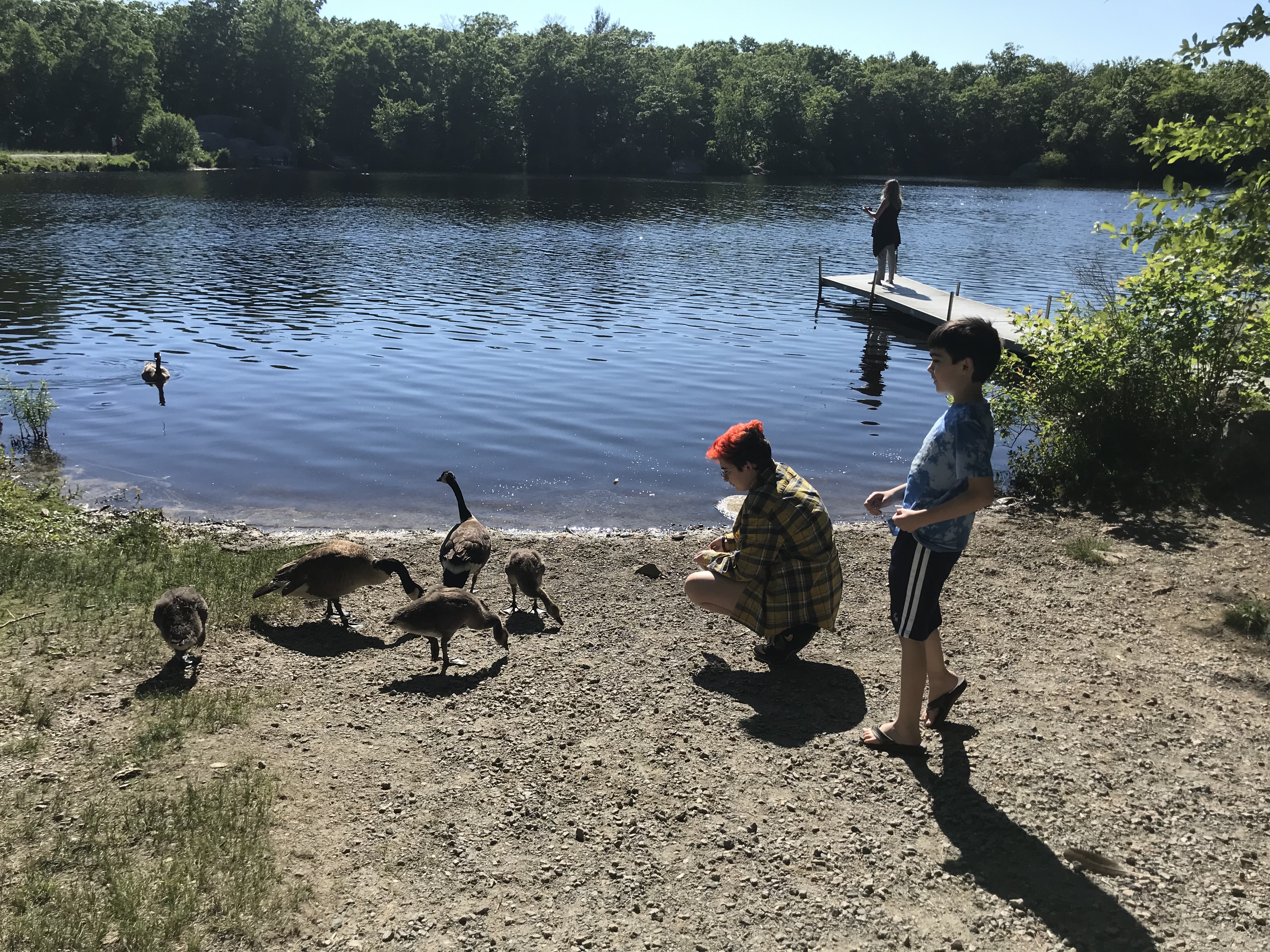
We do not have a strict schedule that we adhere to. So if my child has a rough night due to insomnia, pain, or other health issues, and needs to sleep in later than normal that’s ok here. I get it this may sound completely crazy, unstructured and hard to manage. It really isn’t that unstructured, it’s just not formal, but it works for us. We spend a lot of our time outside in our backyard, community garden, walking in the forest or nature trails, going to the beach, and riding our bikes or hanging out at the local parks.
Since my son is on the Spectrum he has a tendency to find a topic he likes and learns as much as he can before he moves on. He watches educational YouTubers, workbooks 1-3 times a week, and I read to him a lot. He often shares what he learns with me and others without me prompting him. My daughter does work in a short burst. She reads a ton, does handouts on science or English comprehension questions 4x a month, and writes at least one essay every other month. I set them up with what they need and encourage them to explore what excites them, in that excitement they do what they love and share passionately in ways they are comfortable in.
The reason I chose unschooling is that I had two kids who resented school after I had to physically drag them surfboard style out of the house, day after day for various reasons. They didn’t want anything that remotely even looked like school. I was encouraged to deschool, as I will encourage you to deschool your children as well. Deschooling is ultimately what led me to unschooling.
Deschooling is for parents and children who were in public or private school settings, it is a time to adjust to leaving school, to reset their idea of what school is, before they begin to homeschool. It will take some time to decompress, adjust, and in some cases grieve. The longer a child has been in public school the longer and more important it is to deschool to allow for this huge adjustment.
It can be a confusing and uncomfortable time for kids and parents. You may second guess why you chose to homeschool in the first place. It may feel as if nothing is being accomplished which could feel bad to some people. Kids may tell you they don’t want anything to do with things that look like school, yet remind you that is not how they did it at school. They may feel restless at first without their day totally laid out for them (some kids will find they need the structure while others won’t. While deschooling try going to homeschool events. Kids might be nervous to do this, just go anyway. Deschooling is crucial to healing, regaining confidence, refocusing, and adjusting to the new normal of homeschooling. Rule of thumb for deschooling is that it takes at least a month for every year your child has been in school.
So with all that the question remains what does a typical day look like for my family. We wake up whenever our body wakes us. I let my 10-year-old use his electronics for about an hour, then he chooses if he wants to read, do one of his workbooks, or we will watch something together. We spend about 1-2 hours on those items, and I sprinkle random things throughout the day during our formal school year. Summer we do 0-60 minutes depending on what I feel like.
My daughter usually wakes up after I finish with my son. She usually does about 30 minutes on her phone, then jumps right into her work. She has a much more defined idea of what she wants to do. Usually, she will bust out a worksheet, and reads for 30 minutes. We then do our errands, and go for a walk, while in the car the kids listen to educational podcasts, books, or YouTubers. Usually, we discuss what they listen to on the way back from our trip out. Neither are doing lessons or sports right now, but we usually scheduled those for the afternoon. My daughter throughout the day reads and writes, as she always has a book and a notebook with her.
We do a lot of drives especially right now. I work in education on our drives based on what they are learning about. Honestly, I find that no moment is wasted. They do get the late afternoons or after dinner to use their electronics. This may not seem like a lot of work, but surprisingly they learn so much more when they love what they are learning. Getting my kids to do math is the greatest struggle. I usually schedule 15-20 minute sessions for each kid a few times a week. Truth be told they don’t need hours of math because it’s one on one time and we don’t move on until they understand it. Which is why we love Khan Academy for math.
I can’t even begin to explain the amount of learning that goes into our day! It’s hard to quantify on paper. But what I can tell you is my kids are happy, stress less, laugh a ton, are smart, well-spoken, well-read, have less anxiety, socialized, can hold an intelligent conversation with kids their age and adults, are more confident each day, motivated, and passionate. I’ve seen them both blossom where I felt as if they were somewhat stunted while in public school. This time allowed them to heal, develop their sense of self, find their passion and motivation, and find what makes their hearts sing. I couldn’t ask for more as a mom.
Unschooling as a term is often debated as to what it exactly means. In the most general terms, it means child-led learning, which means it allows children to follow their own interests at their own pace. For most, it means no curriculum, tests, or things like phonics, where parents act as facilitators versus teachers. Parents watch to see what their children’s interests are, then provide the environment, resources, and opportunities to explore those interests. The premise is that children are naturally curious, eager to learn, intelligent, and parents trust their children, and this concept.
The critics often will say nothing will be accomplished, that this concept allows kids to be lazy, or unmotivated as children need an adult to constantly tell them what to do. They also suggest unschooling parents are neglectful, or uninvolved. What this concept actually does is teach children how to be self-directed, goal-oriented, believe in themselves, plays to their strengths which boost confidence, and self-motivation, which ultimately helps for high school but especially for college.
Every homeschool family does things differently, that’s the beauty and freedom of homeschooling. Some unschooler’s don’t allow electrons or tv, some limit it, and others allow it. I think of what I do more as sneaky schooling. I have one child who has ADHD and another on the spectrum so the straight-up curriculum doesn’t work here. I find ways to work in English, math, science and history by working it into our daily lives through conversations, cooking, eating, taking walks, going to museums, and playing. We do very little formal learning, and curriculum. Except for math starting this September, as the kids get older I add more in that will help them be ready for high school. I use a variety of resources from books, museums, music, games, art supplies, and even Netflix (there is an entire Facebook group dedicated to how to teach with Netflix.)
Here’s the thing in order to homeschool you need to change your mindset about what school looks like. Take a look at the different types of homeschooling like Charlotte Mason, Unschooling, Roadschooling, Eclectic, Classical, Montessori or Waldorf homeschooling just to name a few.
But when it comes down to it, teaching your child doesn’t have to be all about long dissertations, sitting at a desk or table for hours with workbooks, and handouts. It can be discussing how fractions work while eating pizza. Cooking covers fractions while measuring the ingredients, following the recipe is reading, and chemistry is covered when you discuss how the heat changes food. Lessons can be made from anything in your daily life.
We do not have a strict schedule that we adhere to. So if my child has a rough night due to insomnia, pain, or other health issues, and needs to sleep in later than normal that’s ok here. I get it this may sound completely crazy, unstructured and hard to manage. It really isn’t that unstructured, it’s just not formal, but it works for us. We spend a lot of our time outside in our backyard, community garden, walking in the forest or nature trails, going to the beach, and riding our bikes or hanging out at the local parks.
Since my son is on the Spectrum he has a tendency to find a topic he likes and learns as much as he can before he moves on. He watches educational YouTubers, workbooks 1-3 times a week, and I read to him a lot. He often shares what he learns with me and others without me prompting him. My daughter does work in a short burst. She reads a ton, does handouts on science or English comprehension questions 4x a month, and writes at least one essay every other month. I set them up with what they need and encourage them to explore what excites them, in that excitement they do what they love and share passionately in ways they are comfortable in.
The reason I chose unschooling is that I had two kids who resented school after I had to physically drag them surfboard style out of the house, day after day for various reasons. They didn’t want anything that remotely even looked like school. I was encouraged to deschool, as I will encourage you to deschool your children as well. Deschooling is ultimately what led me to unschooling.
Deschooling is for parents and children who were in public or private school settings, it is a time to adjust to leaving school, to reset their idea of what school is, before they begin to homeschool. It will take some time to decompress, adjust, and in some cases grieve. The longer a child has been in public school the longer and more important it is to deschool to allow for this huge adjustment.
It can be a confusing and uncomfortable time for kids and parents. You may second guess why you chose to homeschool in the first place. It may feel as if nothing is being accomplished which could feel bad to some people. Kids may tell you they don’t want anything to do with things that look like school, yet remind you that is not how they did it at school. They may feel restless at first without their day totally laid out for them (some kids will find they need the structure while others won’t. While deschooling try going to homeschool events. Kids might be nervous to do this, just go anyway. Deschooling is crucial to healing, regaining confidence, refocusing, and adjusting to the new normal of homeschooling. Rule of thumb for deschooling is that it takes at least a month for every year your child has been in school.
So with all that the question remains what does a typical day look like for my family. We wake up whenever our body wakes us. I let my 10-year-old use his electronics for about an hour, then he chooses if he wants to read, do one of his workbooks, or we will watch something together. We spend about 1-2 hours on those items, and I sprinkle random things throughout the day during our formal school year. Summer we do 0-60 minutes depending on what I feel like.
My daughter usually wakes up after I finish with my son. She usually does about 30 minutes on her phone, then jumps right into her work. She has a much more defined idea of what she wants to do. Usually, she will bust out a worksheet, and reads for 30 minutes. We then do our errands, and go for a walk, while in the car the kids listen to educational podcasts, books, or YouTubers. Usually, we discuss what they listen to on the way back from our trip out. Neither are doing lessons or sports right now, but we usually scheduled those for the afternoon. My daughter throughout the day reads and writes, as she always has a book and a notebook with her.
We do a lot of drives especially right now. I work in education on our drives based on what they are learning about. Honestly, I find that no moment is wasted. They do get the late afternoons or after dinner to use their electronics. This may not seem like a lot of work, but surprisingly they learn so much more when they love what they are learning. Getting my kids to do math is the greatest struggle. I usually schedule 15-20 minute sessions for each kid a few times a week. Truth be told they don’t need hours of math because it’s one on one time and we don’t move on until they understand it. Which is why we love Khan Academy for math.
I can’t even begin to explain the amount of learning that goes into our day! It’s hard to quantify on paper. But what I can tell you is my kids are happy, stress less, laugh a ton, are smart, well-spoken, well-read, have less anxiety, socialized, can hold an intelligent conversation with kids their age and adults, are more confident each day, motivated, and passionate. I’ve seen them both blossom where I felt as if they were somewhat stunted while in public school. This time allowed them to heal, develop their sense of self, find their passion and motivation, and find what makes their hearts sing. I couldn’t ask for more as a mom.

 Holistic Mystic D